English
 Русский
 Español
 Français
 Deutsch
 Italiano
Is Turkey Safe for Tourists Right Now?

Is Turkey Safe for Tourists Right Now?
When travelers ask whether Turkey is safe right now, we believe the question deserves a thoughtful answer.
At our company, we do not treat travel safety as a marketing line or a topic to be brushed aside with generic reassurance. We believe guests deserve clear, responsible, and honest guidance so they can plan with confidence. That is especially important in a destination as rich, diverse, and regionally varied as Turkey.
The short answer is this: yes, for many travelers, Turkey can still be a highly rewarding destination right now — but it should be planned thoughtfully, not casually. Current official advisories do not treat the whole country in the same way. The strongest warnings are focused on specific regions, particularly parts of southeast Türkiye, the Syria border area, and situations involving demonstrations, unrest, or wider regional tension.
The More Useful Question: Which Part of Turkey Are You Visiting?
One of the biggest mistakes travelers make is assuming that Turkey can be understood through a single yes-or-no answer.
It cannot.
A guest planning to spend time in Istanbul, Cappadocia, Ephesus, or along the Aegean Coast is asking a very different question from someone traveling near the Syrian border or into the far southeast. That is why serious travel advice needs to be regional, not dramatic.
The current U.S. advisory says to exercise increased caution in Türkiye overall and do not travel to southeast
Türkiye due to terrorism and armed conflict. The UK advises against travel to areas close to the Syrian border, and
Australia advises a high degree of caution overall, with higher-risk warnings applying to certain areas.
That distinction matters. It means travelers should not panic, but they also should not travel on autopilot.
What Most Tourists Should Actually Pay Attention To
For most visitors, the real issue is not whether Turkey is “safe” in the abstract. The real issue is whether the trip is being planned intelligently.
The most relevant practical points for travelers right now are these:
1. Regional differences matter
Turkey is not a one-dimensional destination. The strongest official warnings do not apply evenly across the country. Border areas and parts of the southeast carry the clearest risks, while the classic tourism circuit is a different reality altogether.
2. Demonstrations should be avoided
Official advice warns that protests and demonstrations can occur with little notice and may become disruptive or violent. This is especially relevant in large urban areas. Travelers should not linger, observe, or try to pass through out of curiosity. If a gathering is forming, the right move is always to leave the area.
3. Wider regional tension can affect travel plans
Even if your destination feels calm, regional events can still affect flights, airspace, transit routes, and timing. Official guidance has specifically warned travelers to expect possible disruptions connected to the broader Middle East situation.
Is Istanbul Safe for Tourists?
For many travelers, yes — Istanbul remains one of the most compelling city destinations in the world. But it should be approached as a great global city, not as a carefree backdrop.
The practical concerns in Istanbul are usually not the same as the concerns highlighted in border regions. Official advice points more toward demonstrations and petty crime in busy visitor areas than toward anything that should keep most leisure travelers from visiting the city altogether.
The difference between a stressful city stay and a smooth one often comes down to planning:
Choose your hotel area carefully.
- Use reliable transport.
- Avoid politically sensitive gathering points.
- Keep valuables discreet in crowded places.
- Do not build your days around rushed, unrealistic movement across the city.
Istanbul rewards travelers who move with awareness and confidence. When the logistics are right, it feels inspiring rather than overwhelming.
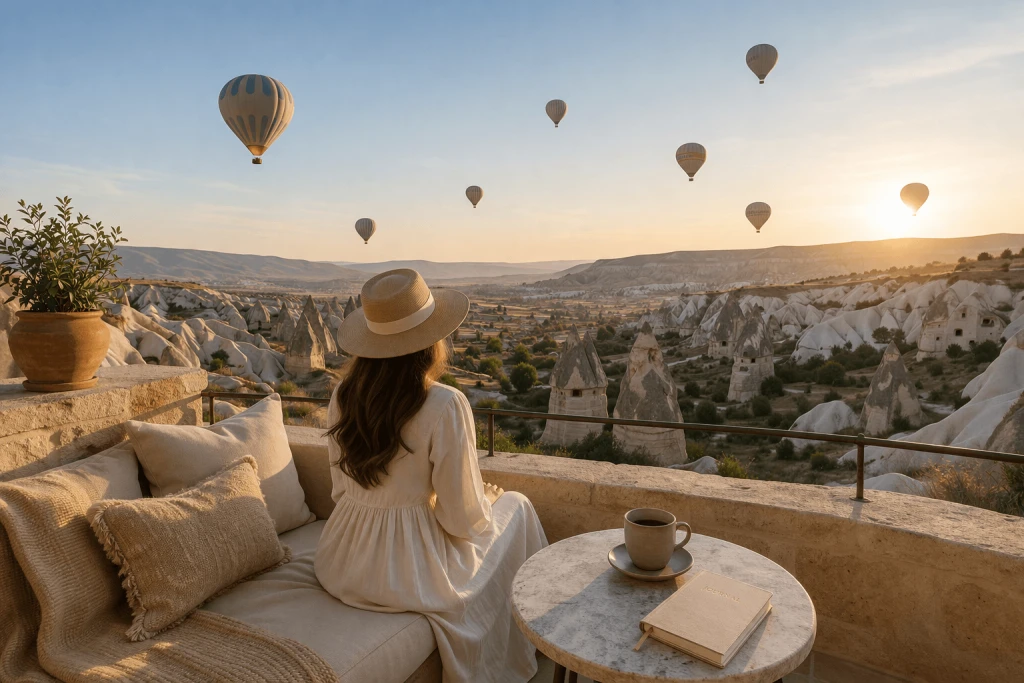
Is Cappadocia Safe for Tourists?
For many guests, Cappadocia feels calmer, easier, and more emotionally restorative than a major city. That is one of the reasons it remains one of Turkey’s most loved destinations.
Current official advisories do not single Cappadocia out the way they do southeast border-related areas. In practical terms, this means the more common stress points in Cappadocia are often not the ones travelers fear most before arrival. More often, the real issues are weather-dependent operations, unclear meeting arrangements, poorly handled transfers, and last-minute confusion with inexperienced providers. The distinction between Cappadocia and higher-risk regions is supported by the current advisory pattern; the operational points are our own practical travel inference.
That is why local support matters so much here. In Cappadocia, peace of mind often comes not from avoiding the destination, but from choosing the right people to look after the experience.
Is Turkey Safe for Solo Female Travelers?
Turkey can absolutely be rewarding for solo female travelers, but it should be approached with awareness, structure, and good judgment.
Australian official guidance notes that women may face verbal or physical harassment and should take extra care, particularly in isolated areas or after dark. That is not a reason to write off the destination. It is a reminder that comfort and confidence increase dramatically when the basics are handled well: central accommodation, reliable transfers, realistic routing, and trusted local support.
The best solo journeys are rarely the most improvised ones. They are the ones designed to feel free without feeling exposed.
What Areas Should Travelers Avoid Right Now?
The clearest official answer is simple: travelers should take the strongest warnings seriously for the Syria border zone and for parts of southeast Türkiye. The U.S. currently advises against travel to southeast Türkiye, while the UK and Australia also maintain stronger warnings for areas near the Syrian border.
Beyond geography, travelers should also avoid:
- demonstrations and protests
- politically tense gathering points
- isolated and poorly lit areas late at night
- loosely arranged last-minute services without clear support
- assuming that headlines or social media snippets tell the whole story
Why Planning Quality Matters More Than Travelers Expect
This is the part many generic articles miss.
The safest trip is not always the cheapest one.
And the most comfortable trip is rarely the one held together at the last minute.
In our experience, travelers feel most secure in Turkey when a few things are done properly:
the route is sensible, airport logistics are smooth, hotel choices are right for the destination, expectations are realistic, and there is someone reliable to contact if plans need to change.
This is especially important in places like Cappadocia, where weather, timing, sunrise operations, and transfer planning all shape the experience. A destination can be beautiful and still feel stressful if the structure behind it is weak. On the other hand, even a complex itinerary can feel wonderfully calm when it is managed with care.
Our Perspective
We believe guests should never be pushed toward false certainty.
Turkey is a remarkable country — layered, generous, memorable, and deeply worth discovering. But when people ask serious questions about safety, they deserve serious answers. That means no exaggeration, no dismissiveness, and no copy-paste reassurance.
For us, this is not just about travel information. It is about trust.
We approach topics like safety with the sensitivity they deserve, because we know travelers are not only choosing a destination. They are choosing how they want to feel while they are there: informed, supported, respected, and at ease.
Final Answer
So, is Turkey safe for tourists right now?
For many travelers, yes — especially when the itinerary focuses on the country’s main tourism regions and avoids the specific areas and situations highlighted in current official warnings. But the right answer is not “everything is perfectly fine,” and it is not “you should avoid Turkey entirely.” The more honest answer is that Turkey remains an extraordinary destination when it is approached with awareness, care, and responsible planning.
That is the kind of travel we believe in: not careless, not fearful, but well considered.
Our partners